
Before you buy
- Match product identity, language, format and quantity before comparing prices.
- Separate included charges from amounts that have not yet been confirmed.
- Record delivery, payment and responsibility details alongside the product total.
Make sure both offers answer the same request
The lowest number in two quotes is useful only if it describes the purchase you actually need. Start with the product reference, language, packaging and quantity. Then compare what each supplier includes in its total and what still needs an answer.
For example, CSV4C and CSV9.5C identify different Simplified Chinese products. If one quote substitutes one for the other, record that difference rather than treating the offers as identical. Confirm availability for the quantities and formats you request.
Compare the unit you will actually sell
For a card lot, match language, condition, total cards, distinct references and repetition limits before comparing costs. A 100-copy same-card lot and a 30-reference character selection serve different offers. Divide the quoted product cost by the confirmed number of saleable units you plan to list, keeping included and unresolved charges visible.
For an opening segment, calculate a per-pack figure only after the exact pack format and count are confirmed. Record delivery and other agreed costs alongside it. This helps assess your own selling plan; a lower purchase total does not establish a higher margin.
Check the product and unit first
For sealed products, specify whether the price is for a pack, a box or a case. Check the exact box format and ask what a case contains and whether it is factory-sealed. For singles, include the card name, number, language, version, quantity and required condition.
If the quantities differ, ask for a comparable offer. Only calculate a per-unit figure after the supplier confirms the unit and any conversion count. A reference image or product code alone does not establish the contents of a supplied batch.
Separate the product total from other costs
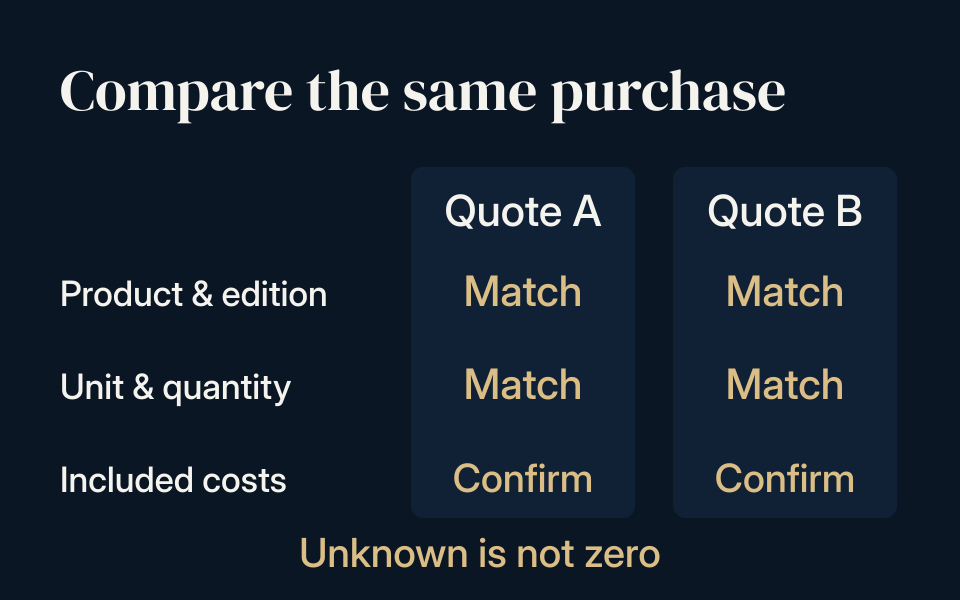
Place each quote in a simple comparison. Mark every item as included, separately quoted or not yet confirmed. A blank amount is an open question, not a zero. Use the same destination and requested delivery arrangement for both enquiries.
Swipe or scroll sideways to see every column.
| Field to compare | Quote A | Quote B |
|---|---|---|
| Product and code | To confirm | To confirm |
| Language and edition | To confirm | To confirm |
| Unit and confirmed contents | To confirm | To confirm |
| Requested quantity | To confirm | To confirm |
| Quote date and validity | To confirm | To confirm |
| Payment currency | To confirm | To confirm |
| Product subtotal | To confirm | To confirm |
| Delivery charge | To confirm | To confirm |
| Other included costs | To confirm | To confirm |
| Costs and responsibilities to confirm | To confirm | To confirm |
| Payment and delivery terms | To confirm | To confirm |
Clarify delivery and responsibility
Ask which delivery costs are included, where the shipment is going and what service is proposed. Check whether any destination charges or other fees are excluded, and who is expected to pay them. Do not assume that a product price covers delivery or every charge at the destination.
This is a purchasing checklist, not tax advice. Requirements and charges depend on the transaction and destination; ask the relevant carrier or qualified adviser about your situation when needed.
Compare the terms as well as the total
Record the currency and payment method, any stated quote validity, and the proposed timing. Ask what happens if the requested item or quantity changes before an agreement. Also discuss how problems such as damage or a discrepancy would be handled; do not infer a policy from another seller.
A quote with an unresolved charge may still be worth discussing, but it cannot yet be treated as a complete cost comparison. Keep the outstanding question visible when deciding what to ask next.
If one supplier offers an alternative, add a separate row for that product instead of quietly replacing your original request. Ask whether the revised offer changes the delivery arrangement or other terms. This keeps your comparison useful even as the discussion develops.
Use the comparison to make a better enquiry
After matching the details, choose the offer that fits your sales plan and the terms you can confirm. Keep your notes with the final agreement so the team receiving the goods knows which products, units and quantities to expect. If a material detail remains unclear, ask for an updated written breakdown before making a decision; the same checklist can be reused for later orders.
You can send Legendary TCG Wholesale a list, product photo or question through WhatsApp. Our assistant can help clarify the request; availability and pricing are confirmed for the specific enquiry. A conversation does not reserve stock or place an order.
Compare two quotes side by side
Download a blank CSV worksheet and fill in the actual terms from each quote. Unknown costs should stay marked for confirmation.
Download comparison worksheet